
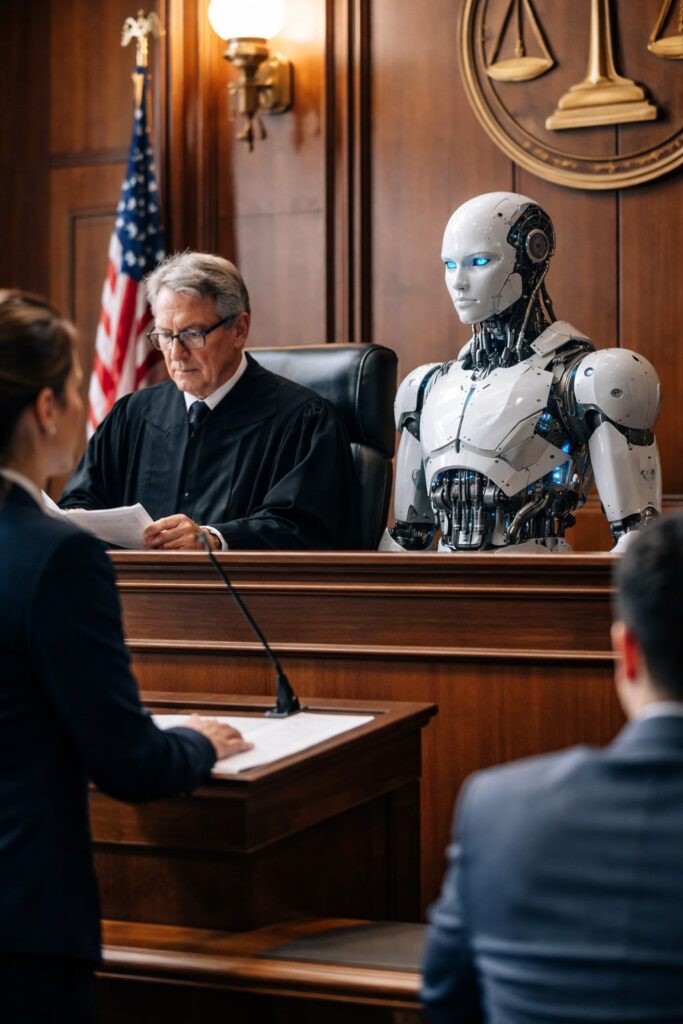
AI backlash often looks irrational—until research reveals the hidden logic: people aren’t reacting to the technology, they’re reacting to the idea of AI stepping into roles they believe require a human mind.
I Didn’t Expect This Much Fear
I have been using large language model (LLM) AI tools for a couple of years now—mostly ChatGPT, but also Gemini. I’ve also spent a good bit of time reading about “prompt engineering,” partly because there is still a real “garbage in, garbage out” reality with AI: the quality of what you ask in part shapes the quality of what you get. Over time, I’ve perceived major improvements in the technology. The logic is stronger, the responses are more coherent, and I personally run into made-up (“hallucinated”) outputs far less often than I used to—especially as my prompting has improved.
What fascinates me is the immediate, visceral negative reaction some people have to AI. Most of my friends know I’m retiring from a direct service practice and ask what I’m doing next. When I mention my interest in AI, the reaction is overwhelmingly negative—and sometimes startlingly intense. People aren’t just critical; many are genuinely afraid. The fears can sound so extreme that, at first, I assumed they were joking. They weren’t.
When I saw an article by Dong and colleagues (2026) appear in American Psychologist, I literally dropped what I was doing to read it. The authors studied fears about AI across 20 countries with 10,000 respondents and tested a psychological explanation for why fear of AI spikes in certain roles and contexts. In this piece, I’ll summarize their main findings—especially the parts that matter for business owners and leaders in industries most likely to deploy AI. If this topic interests you, the original paper is worth reading in full. AI is here to stay so let’s understand the fears.
Why this research is useful for business and industry leaders
A core point the authors make is that fear about AI is often future-oriented—driven by uncertainty and the potential for harm—rather than based on direct, personal experience watching AI fail in these occupations. And fear matters because fear can suppress adoption even when the technology could be beneficial.
The paper also places AI fear in a broader history of technology anxieties. They explicitly note that people have feared other novel technologies and domains (e.g., nuclear power, genetically modified foods, vaccination, and 5G infrastructure). But they argue AI is distinctive because it has the potential to perform tasks and roles previously associated primarily with humans.
What the researchers studied
Dong et al. surveyed nationally representative samples (age and gender) of n = 500 participants in each of 20 countries (total N = 10,000). They focused on fears about AI being deployed in six occupations: doctors, judges, managers, care workers, religious workers, and journalists.
For each occupation, participants rated three things on 0–100 scales:
- How much a “good” professional in that role should have eight psychological traits (warm, sincere, tolerant, fair, competent, determined, intelligent, imaginative),
- How much AI “at its full potential” could display those same traits,
- How afraid they were of AI being deployed in that occupation.
The key idea: “mind–role fit” (mismatch drives fear)
The researchers’ central claim is straightforward: fear rises when people believe a role requires “humanlike” psychological traits, and they don’t believe AI can meet those trait expectations. In their words, fears are associated with the mismatch between (a) traits people deem necessary for an occupation and (b) perceived AI potential to possess those traits.
Two findings here are especially useful:
- In culturally diverse samples, perceived AI potential alone did not predict fear at the individual or country level; you need both the “demand side” (what the role requires) and the “supply side” (what people think AI can provide).
- The mismatch–fear link was robust even after controlling for variation in each component independently.
What the data show: fear varies sharply by role and country
1) Judges are consistently the most feared AI role.
Across all 20 countries, AI judges were feared the most or second-most; AI journalists were feared the least or second-least in 17 of 20 countries.
2) Country differences are large, not trivial.
Average fear levels varied substantially by country. In this sample, country-level fears were highest in India, Saudi Arabia, and the United States and lowest in Turkey, Japan, and China. The authors also show that variation across “real” countries far exceeds what would be expected from individual-level variation alone by comparing real countries to synthetic (resampled) countries.
What this means for business owners
If you sell, deploy, or manage AI in any of these domains, this research supports two planning assumptions:
- Stakeholders will evaluate AI as a role occupant, not just a tool, and will apply psychological expectations to it.
- Rollout strategy cannot be one-size-fits-all across markets, because cultural differences shape both what people expect from a role and what they believe AI can do.
Practical guidance by occupation
Doctors: emphasize support, accountability, and transparency
The authors’ practical example is concrete: if people fear AI doctors because they believe AI lacks the sincerity expected of human doctors, policymakers can reduce concern by implementing AI to support rather than replace clinicians and/or by increasing transparency requirements for medical algorithms.
Business takeaway: In high-trust clinical workflows, position AI as augmentation and not replacement with clear oversight and explainability.
Judges: treat legitimacy and due process as the core concern
Because AI judges are feared most consistently across countries, legal and compliance contexts should assume fear is not simply about performance—it’s about whether an algorithm should occupy a role tied to justice and legitimacy.
Business takeaway: Avoid “AI as final decider”; prioritize auditability, human responsibility, and procedural safeguards.
Managers: build guardrails against “metric-only” control
The paper cites concerns about AI management reducing performance to quantifiable metrics.
Business takeaway: For AI in scheduling, performance analytics, or productivity systems, adopt appeal mechanisms, escalation paths, and clear boundaries on what AI can decide.
Care workers: avoid implying emotional replacement
The paper’s framing highlights that many people fear AI stepping into high-stakes human occupations even without direct experience seeing AI in those roles.
Business takeaway: Focus AI on coordination, monitoring, and administrative load reduction—while leaving relational care and judgment with humans.
Religious workers: define limits clearly and respect cultural expectations
The authors note that concerns differ by region; for example, participants in Japan and Singapore have expressed concern about the credibility of AI preachers’ faith.
Business takeaway: If AI is used in faith contexts, keep it in administrative/educational support unless community governance explicitly defines acceptable boundaries.
Journalists: lower average fear doesn’t eliminate reputational risk
AI journalists were generally least-feared in most countries.
Business takeaway: Even where fear is lower, trust can collapse quickly without strong provenance, correction practices, and accountability.
A non-negotiable: don’t “sell” human traits you can’t justify
One of the most actionable cautions in the paper is about communication. The authors explicitly warn against (a) misleading the public by emphasizing human oversight when no formal regulations exist and (b) manipulatively anthropomorphizing AI as possessing psychological traits citizens value in a role—whether through marketing language or through humanlike interfaces that cue those traits.
A simple business playbook derived from the findings
To operationalize “mind–role fit” in product design and change management (this framework is an applied translation of the paper’s results, not a labeled checklist from the authors):
- Identify the role’s psychological expectations in your target market.
- Assess perceived AI fit (not only actual performance), because mismatch is what predicts fear.
- Choose deployment posture accordingly: support vs. replace; human accountability; transparency standards.
- Localize rollout and messaging: country-level variation is substantial and not explained by individual variance alone.
- Avoid anthropomorphic messaging shortcuts and ensure oversight claims reflect real governance.
Bottom line: Trust, Roles, and Responsible AI
The reason I “dropped everything” to read Dong et al. is that the research explains something I keep seeing in real conversations – fear of AI isn’t just a knowledge gap that disappears with more facts. When AI is framed as stepping into roles associated with judgment, care, fairness, or legitimacy, people evaluate it as a role occupant. Fear rises when they believe the role requires human psychological traits that AI can’t truly provide. For business owners and leaders, the implication is practical: adoption hinges on trust and expectations as much as accuracy, and that trust varies by culture and by role. Making sure that subject matter experts are deeply involved in training the AI is also important.
In parallel, many expert frameworks emphasize that AI should be governed with enforceable, risk-based rules that build trust through transparency and accountability (e.g., OECD AI Principles; European Union AI Act). Experts also warn that the benefits of AI should not be captured by a narrow set of actors. The United Nations AI Advisory Body’s work explicitly flags risks of concentration of wealth and power, reinforcing the case for governance that broadens access and prevents outsized control. In the U.S., AI governance is also being shaped through formal advisory mechanisms—for example, the congressionally authorized National Artificial Intelligence Advisory Committee (NAIAC), which advises the President and the National AI Initiative Office. I don’t fear AI itself—but like any powerful technology, it needs safeguards. Without meaningful oversight and clear rules, the risks (harm, misuse, and concentration of power) rise faster than trust can keep up. That’s why these advisory bodies matter: they exist to keep AI development aligned with public values and accountability, not just what is technically possible or commercially profitable.
Reference
Image generated by ChatGPT